


Yes. The position of a house on its plot can influence how much direct sunlight reaches the walls and windows.
Natural Cooling for Kerala Homes – An architect can study the site before deciding the building orientation. Spaces that receive strong afternoon sun can be protected with suitable shading, while windows can be positioned to encourage useful airflow.
Good site planning can therefore become the first step towards a naturally more comfortable home.
Moving air can make an indoor space feel considerably more comfortable in warm weather. Cross ventilation is particularly useful when openings are placed on suitable sides of a room.
Windows, ventilators and internal openings can be planned to allow fresh air to enter and warmer air to escape. Instead of simply adding more windows, the important factor is understanding how air can travel through the house.
This is where careful residential planning becomes valuable.
Direct sunlight can increase indoor temperatures, especially through large windows and exposed walls. External shading can help limit this heat before it enters the building.
Natural Cooling for Kerala Homes -Roof overhangs, balconies, screens, verandas, pergolas and appropriately positioned trees can provide useful protection. Shading can also improve the comfort of outdoor spaces around the house.
The right solution depends on the site’s direction, surroundings and architectural style.
The roof receives significant solar exposure, so its design should not be treated as an afterthought. A suitable roof form, insulation strategy and ceiling design can help reduce heat transfer into living spaces.
For some Kerala homes, a combination of roof overhangs, ventilation and carefully selected materials can improve indoor comfort. The best approach depends on the building design and local site conditions.
Yes. Plants can contribute to a more pleasant environment around a house. Trees and other vegetation can provide shade to selected parts of the building while reducing the amount of hard, heat-absorbing surface around the property.
A landscape plan can therefore work together with the architecture rather than being added only for decoration.
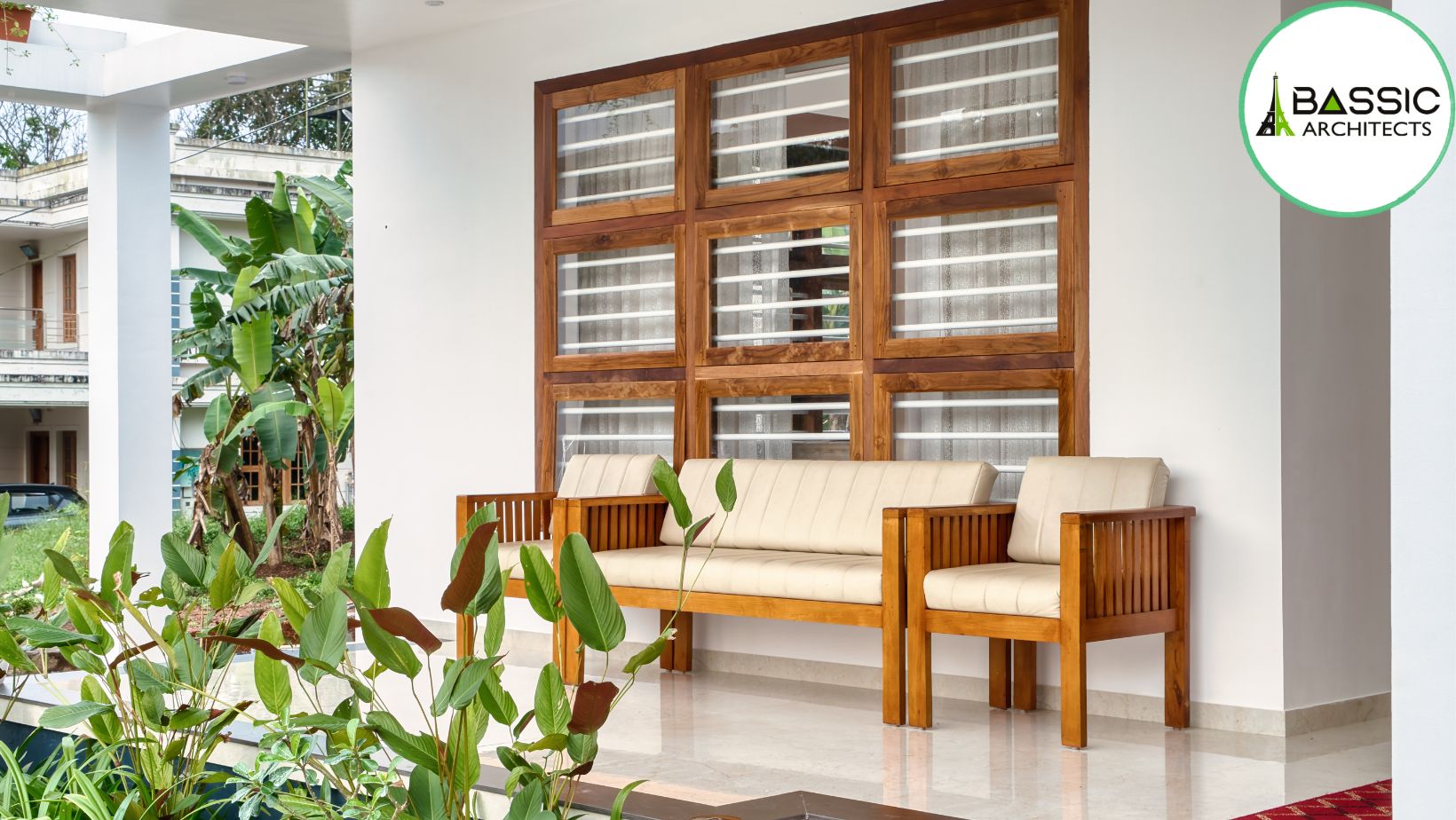
Natural Cooling for Kerala Homes – Window size and location should be considered carefully. Large glass areas can provide beautiful views and natural light, but poorly positioned glazing may also allow considerable heat into the interiors.
Using shaded windows, suitable glass, ventilators and well-planned openings can help balance daylight, views and thermal comfort.
The arrangement of rooms can influence how easily air moves through a home. Avoiding unnecessary barriers and connecting suitable spaces can support better circulation.
Courtyards, double-height areas and strategically positioned openings may also be considered where appropriate. These features should be selected according to the home’s size, site and lifestyle rather than simply following a trend.
Reducing indoor heat starts before the first brick is laid. Orientation, ventilation, shading, roof planning, windows, landscaping and internal layout can all contribute to a cooler home.
For homeowners in Kerala, the goal should not simply be to build a house that looks attractive. It should also respond intelligently to the local climate. With thoughtful architectural planning, natural cooling strategies can work alongside modern technology to create a comfortable and energy-conscious home.
Natural Cooling for Kerala Homes – A comfortable Kerala home starts with thoughtful planning. Proper orientation, natural ventilation, effective shading, suitable roof and window design, landscaping, and smart interior planning can all help manage indoor heat. These climate-responsive strategies can reduce dependence on air conditioning while supporting a more comfortable and energy-conscious home.